45 reading food labels for diabetics australia
Understanding food labels fact sheet - NDSS Understanding how to read food labels can help you choose foods with more fibre and less saturated fat, salt (sodium), added sugars and kilojoules. Food labels will typically include a nutrition information panel, list of ingredients, the 'use by' or 'best before' date and identify potential food allergens and additives. Food labels also tell you the amount of carbohydrates (carbs) you eat and drink. This can help you manage your blood glucose levels. Read more in our fact sheet ... Food labels - NHS These labels provide information on the number of grams of fat, saturated fat, sugars and salt, and the amount of energy (in kJ and kcal) in a serving or portion of the food. But be aware that the manufacturer's idea of a portion may be different from yours. Some front-of-pack nutrition labels also provide information about reference intakes.
Food labels - Better Health Channel Reduced fat or salt - should be at least a 25% reduction from the original product. Low fat - must contain less than 3% fat for solid foods (1.5% for liquid foods). Fat free - must be less than 0.15% fat. Percentage of fat - remember 80% fat free is the same as 20% fat, which is a large amount.
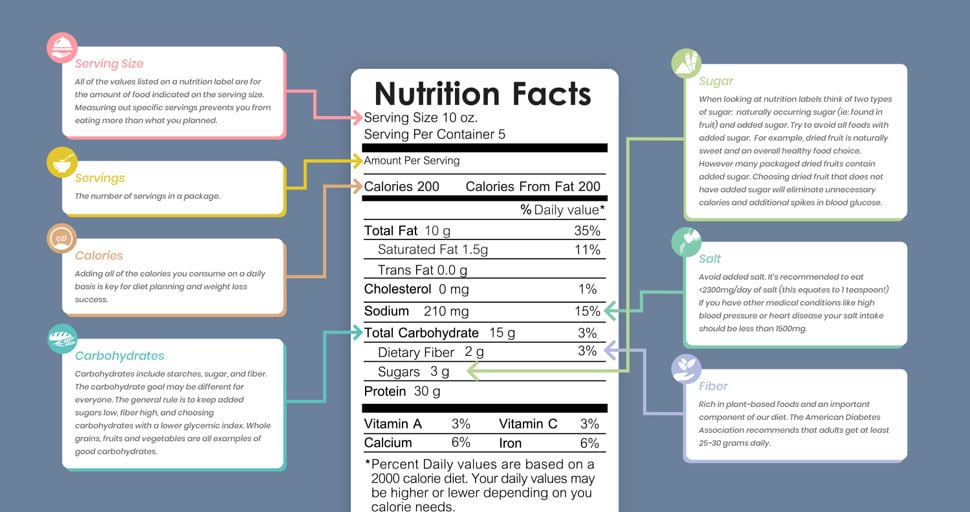
Reading food labels for diabetics australia
PDF Label reading fact sheet | Baker Institute Label reading Nutrition Information Panel To compare products, use the targets below: Sodium (salt) Aim for less than 400mg per 100g. Less than 120mg per 100g is better. Energy For snacks, aim for less than 600kJ per serve. Saturated fat Aim for less than 2g per 100g. Oils, cheese, nuts and seeds will have more saturated fat. SBS Language | Reading food labels for diabetes meal planning Reading food labels for diabetes meal planning DOWNLOAD 78.88 KB SUBSCRIBE Source: Getty Images/Peter Dazeley This year's National Diabetes Week (11 - 17 July 2021) is focused on diabetes stigma and mental health. According to Accredited Practising Dietitian Purva Gulyani it's everyone's role to support people who are impacted by these stigmas. Label reading - Baker Label reading This fact sheet gives you guidance on understanding how to read nutrition information panels to help you identify healthy choices. This fact sheet will allow you to identify processed and packaged foods that are: lower in energy (kJ) lower in saturated and trans fat lower in sugar lower in sodium (salt) higher in dietary fibre.
Reading food labels for diabetics australia. Reading food labels: Tips if you have diabetes - Mayo Clinic Look for foods with 3 or more grams of fiber. Put sugar-free products in their place Sugar-free doesn't mean carbohydrate-free. Sugar-free foods may play a role in your diabetes diet, but remember that it's equally important to consider carbohydrates as well. A sugar-free label means that one serving has less than 0.5 grams of sugar. What should I eat - Diabetes Australia The main protein foods are: Meats, chicken, fish, & tofu Eggs Nuts & seeds Cheese There are some protein foods which also contain carbohydrate such as milk, yoghurt, lentils and legumes which will have an effect on blood glucose levels but these should still be included as part of a healthy diet. Drink water Labelling - Food Standards The Food Standards Code includes the general labelling and information requirements (Chapter 1 of the Code) that are relevant to all foods, and sets out which requirements apply in different situations (for example food for retail sale, food for catering purposes, or an intra-company transfer). Reading Food Labels | ADA - American Diabetes Association The Nutrition Facts labels on foods are really the key to making the best choices. We'll cover the basics so that these labels make shopping easier for you. Get started Understanding Carbs You've heard it all. From carb-free to low-carb, to whole and empty carbs, it's hard to know what it all means. Learn more Food & Blood Sugar
Become A Partner | Australia's Healthy Weight Week The Dietitians Association of Australia offers tailored corporate partnerships for Australia's Healthy Weight Week with commensurate recognition, exposure and public brand alignment opportunities. To discuss further, please contact us on +61 2 6163 5200 or by email nationaloffice@daa.asn.au. What should I read on food labels for managing diabetes? The research into glycemic index showed that it was not just the 'sugar' content of foods that would predict the impact of a food on BGLs but the processing and type of starch was of equal importance. A good example of this is white bread. If you just considered the sugar content of white bread you would think it was fine for diabetes. Reading food labels & nutrition panel - Diabetes Queensland Reading food labels & nutrition panel - Diabetes Queensland Home About diabetes Living with diabetes Healthy eating Reading food labels Reading food labels When choosing packaged food, choose products with: lower energy (kilojoules) if you are trying to lose weight lower total and saturated fat lower sugar lower sodium higher fibre Reading Food Labels | GI Foundation In Australia and New Zealand and other parts of the world, the term carbohydrate as listed on the nutrition information panel (NIP) only includes the starches and sugars in the food. It does not include fibre because fibre is not broken down during digestion. Therefore "total carbohydrate" includes the starches, sugars and fibre in the food.
Food Label Reading - PHN - Enrol Now - Diabetes SA This program covers healthy eating principles, carbohydrate containing foods, and understanding food labels and carbohydrate portions. We cover the key nutrients you should be reviewing in packaged foods, what amounts to aim for, and how to identify different carbohydrate portions from a food label. Understanding food labels | Diabetes UK Follow these tips to become expert at understanding labels in minutes: With traffic light labels, go for green, occasionally amber, and red only as a treat. Reference intake (RI) percentages are given per portion, and indicate how much the portion contributes to the amount of calories, fat, sugars and salt an average adult should have each day. PDF how to understand food labels - Eat For Health Generally choose foods with less than 10g per 100g. For milk, yogurt and icecream, choose less than 2g per 100g. For cheese, choose less than 15g per 100g. Saturated Fat Aim for the lowest, per 100g. Less than 3g per 100g is best. Sodium (Salt) Choose lower sodium options among similar foods. Food with less than 400mg per PDF Welcome to Diabetes Victoria | Diabetes Victoria Diabetes, Victoria, Type 1 Diabetes, Type 2 Diabetes, Gestational Diabetes, Collection Business, Diabetes Resources, Diabetes Programs, Diabetes Events, ... Lived Experience with Diabetes Award. read more. Important Update - Medical devices and airport security ... (DGR) status with the Australian Tax Office. Patron: The Governor of Victoria ...
Diabetes & The Diabetic Diet: Ultimate Guide
Tooth Smart - Reading Food and Drink Labels Healthy Mouths Healthy Living. Advice for pregnant women. Advice for children 0-5 years. Advice for children and young people 6-17 years. Advice for adults. Advice for multicultural communities. Advice for Aboriginal people. Integrated oral health. Resources to view or order.
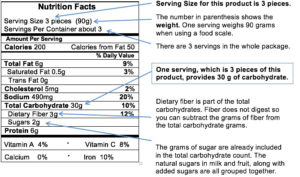
Learning To Read Labels :: Diabetes Education Online
PDF Reading food labels - Queensland Health can help you make healthy food choices. Food Standards Australia and New Zealand (FSANZ) regulates food labelling in Australia. Most packaged food and drink must have a nutrition information panel. Exceptions include those in very small packages, some baked products and take-away food. 100g. This does not set apart types of Nutrition information panel . The nutrition information panel provides a detailed description of the food or drink. It

How to Read a Food Label, by Diabetes Care Community - YouTube
Labelling poster - how to read food labels - Food Standards This interactive resource explains the food labelling requirements set out in the Food Standards Code and what that information means. Click on the numbers to find out more about food labelling. A useful poster is also available. You can download a copy here (PDF 372KB), or for a printed A2 version please email information@foodstandards.gov.au.

Diabetes and How To Read Food Labels - YouTube
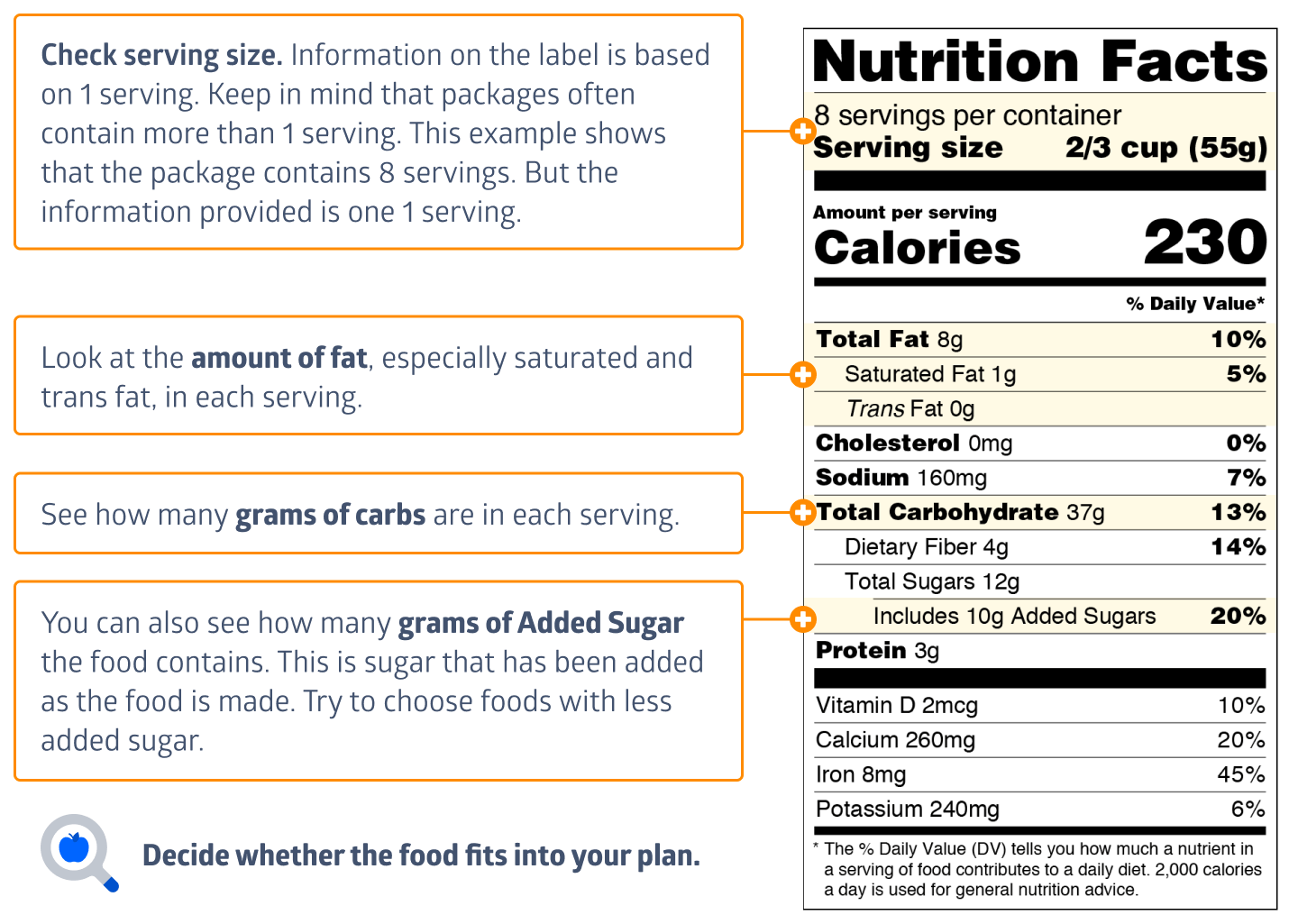
Food Labels | CDC - Centers for Disease Control and Prevention If you eat the whole thing, you are eating 8 times the amount of calories, carbs, fat, etc., shown on the label. Total Carbohydrate shows you types of carbs in the food, including sugar and fiber. Choose foods with more fiber, vitamins, and minerals. Choose foods with lower calories, saturated fat, sodium, and added sugars.

How to Read a Nutrition Label - FitBodyHQ
How to read food labels | Diabetes Victoria How to read food labels | Diabetes Victoria. Username. Password. Forgot your password? | First time logging in? link. 1300 437 386 Contact us. NDSS Helpline 1800 637 700.
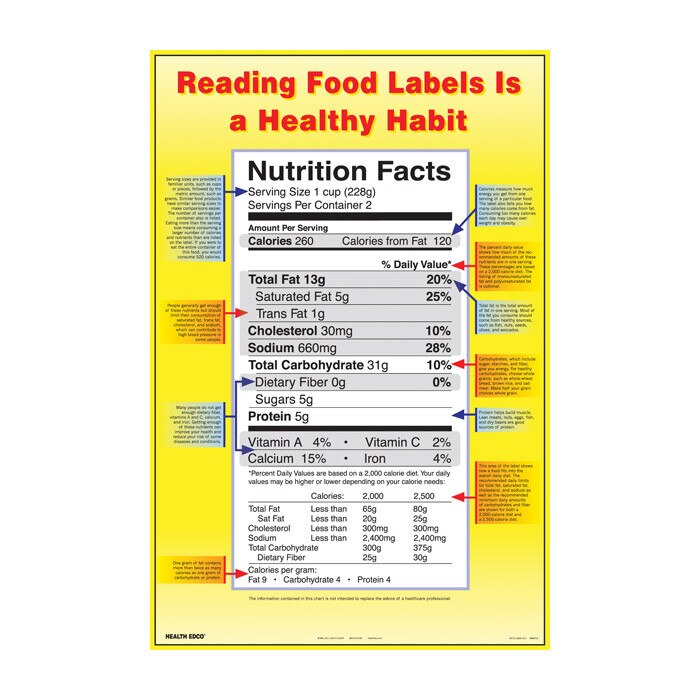
Reading Food Labels Is A Healthy Habit Chart | Health Edco
Food label reading guide | Nutrition Australia Reading food and drink labels can help us make healthy choices. Food and drink labels will include information about the product, where and when it was made and a statement of ingredients, as well as any warnings or allergen statements. Most food or drink packages have a Nutrition Information Panel (NIP) which tells you the quantity of various nutrients a product contains per serve and per 100g or 100 ml.

31 Label Reading For Diabetes - Labels 2021
How to read food labels | healthdirect In Australia, the law requires all manufactured foods to carry labels containing safety and nutrition information. This information helps you to make decisions about the food you buy and eat so you can follow a healthy diet. The label will tell you: the name of the product, describing accurately what it is the brand name

Daulat Farms | Daulat Farms Group of Companies | Daulat Organic Farms and Exports | Daulat ...
Glycemic Index - Diabetes Australia GI numbers are to be used as a guide only as individual foods do not have the same response in all people with diabetes. Low GI foods are foods with a GI less than 55. Intermediate GI foods are foods with a GI between 55 and 70. High GI foods are foods with a GI greater than 70.
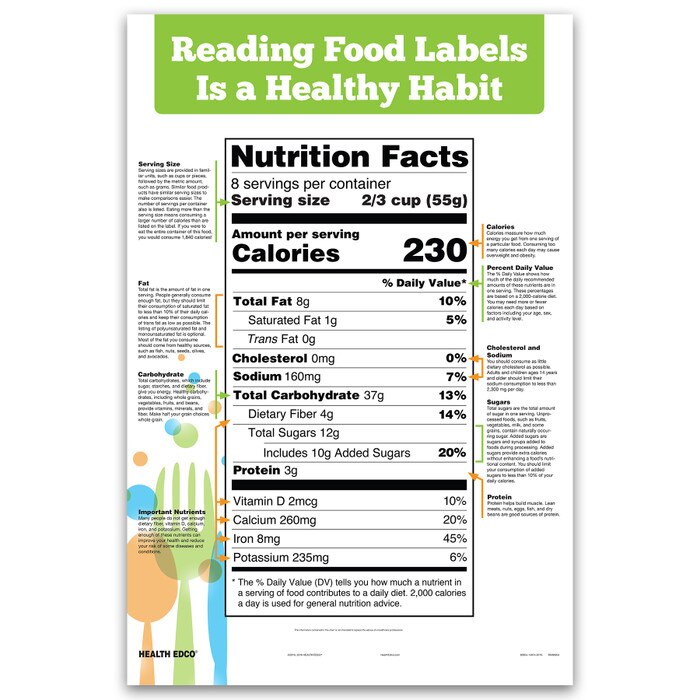
Reading Food Labels Chart For Health Education | Health Edco
Learning To Read Labels :: Diabetes Education Online On a nutrition food label, subtract the fiber from the total carbohydrate amount. When you read food labels, the grams of sugar are already included in the total carbohydrate amount, so you do not need to count this sugar amount separately. The grams of sugar listed include both natural sugars, from fruit or milk, and added sugars.

Strawberry And Oats Smoothie For Healing Your Diabetic Level | Oat smoothie, Diabetic health ...
PDF 5D. reading food labels 3 - mingaramed.com.au The Nutrition Information Panel provides very useful information that can be used to decide whether a food is suitable for someone with diabetes. READING THE INGREDIENTS LIST The ingredients contained in a product are listed in descending order of weight.On the ingredient list the proportion of certain characterising ingredients must also be declared.

How to Read a Food Label for a Diabetic Diet
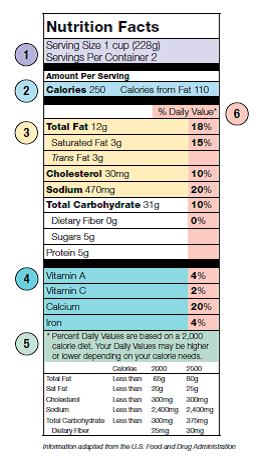
How to understand food labels | Eat For Health The Nutrition Information Panel on a food label offers the simplest and easiest way to choose foods with less saturated fat, salt (sodium), added sugars and kilojoules, and more fibre. It can also be used to decide how large one serve of a food group choice or discretionary food would be and whether it's worth the kilojoules.
31 Label Reading For Diabetes - Labels 2021
Label reading - Baker Label reading This fact sheet gives you guidance on understanding how to read nutrition information panels to help you identify healthy choices. This fact sheet will allow you to identify processed and packaged foods that are: lower in energy (kJ) lower in saturated and trans fat lower in sugar lower in sodium (salt) higher in dietary fibre.
Daulat Farms | Daulat Farms Group of Companies | Daulat Organic Farms and Exports | Daulat ...
SBS Language | Reading food labels for diabetes meal planning Reading food labels for diabetes meal planning DOWNLOAD 78.88 KB SUBSCRIBE Source: Getty Images/Peter Dazeley This year's National Diabetes Week (11 - 17 July 2021) is focused on diabetes stigma and mental health. According to Accredited Practising Dietitian Purva Gulyani it's everyone's role to support people who are impacted by these stigmas.
How to Eat Healthy with Diabetes
PDF Label reading fact sheet | Baker Institute Label reading Nutrition Information Panel To compare products, use the targets below: Sodium (salt) Aim for less than 400mg per 100g. Less than 120mg per 100g is better. Energy For snacks, aim for less than 600kJ per serve. Saturated fat Aim for less than 2g per 100g. Oils, cheese, nuts and seeds will have more saturated fat.
Post a Comment for "45 reading food labels for diabetics australia"